

I still think back to how mysterious online slots appeared during those first sessions. Every spin seemed to follow some concealed rhythm—hitting me after a big win, teasing me with near-misses. That impression changed once I began investigating the engine behind every digital bet: the random number generator. As a Swedish player who’s spent plenty of evenings at duelkasino slotspel, I’ve come to rely on understanding how an RNG actually works, because it turns gambling from a guessing game into a transparent system. A casino-grade random number generator is hardly a mysterious black box out to cheat you; it’s a rigorously tested algorithm that ensures no outcome can be foretold, manipulated, or replayed. Understanding how it functions and where to look for proof of fairness has given me confidence every time I fund my account with Swish and start a game. I’m convinced every player in Sweden will gain from that same clarity.
What a Casino Random Number Generator Actually Is
Think of a casino random number generator as software that produces numbers or symbols you are unable to predict any better than random chance. Most online casinos use a pseudorandom number generator (PRNG). It requires a starting value—called a seed—and passes it through a complex mathematical formula to generate a stream of results that seem independent and evenly distributed. The seed may be built from something chaotic, like the precise millisecond a server restarted combined with hardware noise, so the starting point is practically impossible to reproduce. Even though a PRNG is deterministic on paper, the sheer length and speed of the sequences it generates make them indistinguishable from true randomness for any practical purpose a player will ever face. Without this technology, a digital slot reel would soon fall into a predictable loop, and card shuffles could be reverse-engineered.
The fairness all relies on one crucial property: each new number is statistically independent of the last thousand before it. If I land three scatters in a row, the generator does not “remember” that and adjust what comes next—it just produces another number, as disconnected as coin flips. Duel Casino and all Swedish-licensed operators are required to use RNG solutions that have passed stringent randomness tests before they can go live. This independence is why a session can seem streaky and still be perfectly fair, and why any strategy based on past outcomes has no mathematical leg to stand on. Once I understood that the algorithm isn’t a sentient opponent but simply a tool that reproduces genuine chance, I had my first real step toward playing with peace of mind.
Why a Licensed Casino’s RNG Is Important More Than You Think
The Swedish Gambling Authority’s licence is a tough requirement because it compels operators to meet technical standards that impact randomness and player protection. When I first joined at Duel Casino, I noticed the licence number plainly at the bottom of the page, tied to Spelinspektionen’s public register. That licence tells me the casino’s RNG systems have been verified, its games tested, and its payout reporting regularly audited. Unlicenced sites can simply state they use an RNG and display fake certificates; without a credible jurisdiction, nobody verifies whether the numbers are genuinely random or whether a game has been covertly changed to cut payout frequencies. In Sweden, we have strong consumer protection, but only when we use operators holding the national licence.
Duel Casino builds on that foundation with practical measures I value. Payment methods like Swish and Trustly process deposits instantly, and withdrawals go through within a timeframe that usually ranges from a few hours to three banking days, subject to verification checks. That operational flow is just as important as the RNG itself—a fair game means little if your winnings are stuck. I also notice a strong focus on responsible gambling tools: deposit limits, reality checks, and self-exclusion that remind me a random generator can churn out losing streaks, so I need to set boundaries ahead of time. When the whole environment is designed to uphold fairness and player wellbeing, the RNG changes from a technical talking point into the steady pulse of a secure entertainment experience.
Verifying RNG Fairness as a Player: Accreditations, RTP Reports and Additional
I’ve put together a simple checklist I follow whenever I want to confirm the RNG behind my games has been properly tested. First, I check the page footer and search for accreditation logos from labs like eCOGRA or iTech Labs. Clicking them should display a valid certificate that contains the casino’s name and exact URL. Second, I access a game’s information sheet—usually via a small “i” icon or a menu inside the slot—and verify that the theoretical RTP stated corresponds to the certified range. Third, I may play a few dozen rounds in demo mode just to see that outcomes aren’t repeating in a suspicious pattern. Short testing has no real statistical power, but it offers me a tactile feel that the algorithm is running along as it should.
At Duel Casino, I’ve found this information straightforward to track down. The site often has a dedicated page about fairness or game RTP that aggregates values for several titles, and the live chat team has been quick to furnish links to the latest test house reports whenever I’ve asked. I also watch for the “Säkert Spel” or similar Swedish responsible gambling label—it denotes ongoing compliance audits that frequently extend to technical systems. None of these steps take the place of a formal statistical analysis, but they handle the practical due diligence I think every player should do before depositing real kronor. Once I’ve established that baseline, I can devote myself to enjoying the volatile swings of random chance rather than second-guessing the software.
In what manner RNGs Guarantee Impartial Outcomes in Assorted Game Types
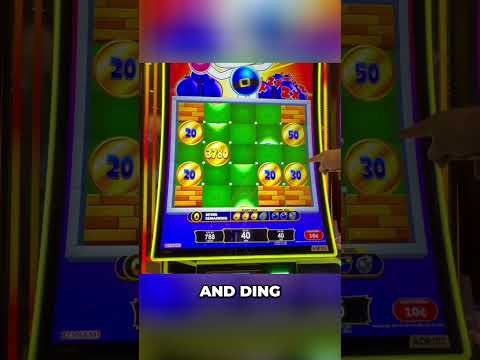
Video slots are the clearest use case. When I activate spin on a Nose mythology style slot at Duel Casino, the RNG selects a number the nanosecond I click, maps it to a virtual reel position, and halts the display at that spot. All five reels stop at once based on that single number; the spinning animation you see is just a visual layer on top. The programming ensures every possible combination lands with its mathematically correct probability, matching with the return-to-player percentage the studio markets. Table games follow the same pattern: the virtual roulette wheel is a numerical simulation. The RNG picks a number from 0 to 36 for European roulette before the ball graphic even starts animating. It seems authentic because the underlying maths mirrors a physical wheel, but the randomness is entirely digital.
Card games like blackjack or video poker depend on continuous shuffling governed by the RNG. Instead of mimicking a single deck shuffled and dealt from the top, many digital versions reorder after each hand. That means the cards you obtain are chosen independently of what showed up seconds ago. This prevents card counting but preserves the house edge exactly as designed. One thing to consider: live dealer tables at Duel Casino, with real presenters and physical cards, avoid a software RNG for outcomes. They draw real cards or spin real wheels, which are broadcast to you. For everything else in the virtual lobby, the RNG is the impartial dealer. Knowing that the same certified algorithm controls a simple fruit slot and a feature-packed Megaways title offers me a consistent baseline of trust.
RNG system and Gaming on Mobile: No Difference in Fairness
When I shifted from spinning slots on my laptop to my phone, I questioned if the RNG behaved otherwise in a mobile browser. The reality is, modern online casinos deliver games from the identical server-side software regardless of what device you use. The RNG works on a backend system; the phone just receives outcomes and renders animations, so the randomness generation is identical. Duel Casino’s mobile site is constructed to adjust to small screens without comprimising load times, and I’ve seen the identical game behaviours, bonus hit rates, and payout cadence on iOS and Android that I saw on desktop. The sole factor that shifted was how easily I could spin while sitting for my train in Stockholm, not the probability of a win.
The optimisation goes beyond just screen size. Touch controls seem snappy, the cashier accepts Swish and mobile BankID verification in seconds, and game lobbies navigate smoothly even on older devices. Because the RNG stays untouched, a player using a tablet in Malmö has the equivalent statistical odds as someone on a high-end gaming PC in Umeå. I consider this parity as a core expectation for any Swedish-licenced casino today, and I always verify it during my first session on a new site. Understanding the engine behind the reels is stable and independently audited no matter which screen I choose makes me far more inclined to stay and delve into the full catalogue Duel Casino has created.
Theoretical Edge and RTP: What RNGs Do and Don’t Control
One typical misunderstanding I encounter is confusing the random number generator with the house edge. The RNG guarantees outcomes are unpredictable, but the maths that gives the casino its statistical advantage exists completely in the game rules. European roulette has a house edge of 2.70% because the single zero creates 37 pockets while a straight-up bet pays 35 to 1. The RNG only determines which pocket the virtual ball lands in, and it acts with equal probability across all 37 numbers. Similarly, a slot with a 96% RTP means that over millions of spins the RNG allocates wins that return 96% of total wagers. It doesn’t purposely time individual wins to hit that number in a single session. I’ve accepted that the short term will always be a rollercoaster because randomness clusters wins and losses naturally, not because the RNG adjusts itself.
Swedish-licensed casinos like Duel Casino must publish the theoretical RTP for each game or at least make it easy to find. I usually locate this info inside the game’s help or info screen. It often shows separate RTP figures for different bet setups, like standard play vs. bonus buy features. Understanding the division between randomness and edge helped me stop chasing patterns and start seeing each bet as an independent event ruled by a fixed mathematical model. The RNG does its part silently; the operator’s long-term profitability flows from the design of the games they host, not from tweeking the numbers while I play. That’s why I spend more energy picking games with attractive RTP values and volatility that fits my patience than fretting over whether the algorithm is “tight” today.
The Role of Audit Bodies and External Reviews
A casino doesn’t just acquire an RNG, install it, and declare it fair. Third-party audit firms like eCOGRA, iTech Labs, GLI, and NMi conduct series of randomness verification tests, pushing billons of simulated cycles through the generator. They ensure that numbers are distributed uniformly across the entire spectrum, that patterns like poker hand frequencies correspond to predicted chances, and that no correlation is found between sequential numbers. Once an RNG passes, the lab provides a certificate the casino needs to uphold and update regularly. The Swedish Spelinspektionen mandates all licensed operators to have their RNG solutions certified by such recognized organizations, which adds a layer of regulatory supervision that gives confidence to me every time I enter a Swedish-licenced site.
These audits stretch to the games themselves. The lab links to the active game server, retrieves game logs, and compares millions of real-money or test round outcomes against the calculated RTP and variance model the developer submitted. If the real-world data strays beyond an allowed threshold, the game is marked and examined. At Duel Casino, the footer often features tappable icons of the audit houses; tapping one opens the current certificate as a PDF. I’ve developed a routine of verifying those certificates whenever I explore a new casino, because they’re the single best on-paper proof that the RNG is not simply a marketing promise—it’s a tested and retested piece of technology.
Widespread Myths Regarding Casino RNGs
A single myth that continues to circulates on forums is that an RNG operates on a cycle a player can exploit by timing your bets. The sequences are astronomically long they never repeat within a human lifetime, and the seed changes constantly based on system entropy. A further common belief is that slots “owe” a win after a dry spell as the RTP needs to balance out. I must remind myself that a 96% RTP defines the limit as spins approach infinity, rather than what occurs across a hundred or even a million rounds. The RNG doesn’t track your win-to-loss ratio, and it doesn’t decide to tweak future outcomes. Each outcome stands alone. That is why a jackpot can land back-to-back and equally easily be absent for tens of thousands of spins.
There’s also a persistent idea that casinos can hit a switch and cause the RNG to pay out less during peak hours or after a player claims a bonus. A certified RNG can’t be dynamically altered without breaking its audit trail and voiding the lab’s certificate, which would promptly trigger regulatory action from Spelinspektionen. Duel Casino, as a licensed operator, works within a framework where any manipulation would be detected during the regular audits it must undergo. I’ve found that facing these myths with the simple truth of independent, uninterupted algorithmic randomness keeps me from wasting energy on wagering systems and enables me to enjoy the blackjack table or a volatile slot for what it is: pure, short-term uncertainty lodged in a fair long-term model.
Getting the Most from an Random Number Generator-Driven Session at Duel Casino
Understanding the RNG allows me to plan my sessions around elements I can control. I determine a loss limit before I launch a game, pick titles with RTP and variance that fit my playtime, and treat bonuses as a chance to prolong play rather than a guaranteed way to beat the algorithm. Duel Casino’s welcome offer usually pairs a matching deposit and free spins with explicit wagering requirements. I always review those in full because the RNG is indifferent to whether I’m playing with bonus money or cash, but the rules around max wagers and eligible games directly affect my experience. I also sample different game types: a low-volatility slot causes the RNG dish out more frequent, smaller wins to bolster my funds, while a high-variance one leans on the identical randomness to from time to time provide bigger payouts. Recognizing the system is neutral allows me to choose based on true choice, not irrational belief.
After playing RNG-driven games at a authorized Swedish casino, I view the chance as a certainty, not a threat. Duel Casino provides the licenses, the transaction speed via Swish and Trustly, and the mobile-optimized interface that allowed me to zero in entirely on the fun. The main insight isn’t a dry description; it’s that I can verify fairness, comprehend what the built-in margin means in practice, and then just engage. My subsequent move was to pick three games with different RTP levels from their info screens, evaluate them in demo mode, and establish a spending limit for actual gaming. That method—evaluate, verify, gamble responsibly—is what I’d suggest to anyone in Sweden who aims to develop a connection with casino RNGs based on understanding, not myth.